- VEpeak: the authors were only able to identify two relevant studies and did not find a statistically significant effect of FES cycling on VEpeak, stating larger studies are required to make better determinations.
- VO2peak: again two studies were identified assessing VO2peak and the findings were statistically significant, indicating a positive, though small, effect of FES+cycling on VO2peak in users with SCI.
Discussion
The authors highlight that abdominal FES improves FVC, PEF, and MEP, leading to stronger exhalations, better airway clearance, and more effective coughing. Gains in FVC also reflect increased lung volumes available for ventilation, supporting greater activity tolerance. Together, these improvements may play a critical role in reducing respiratory complications in people with SCI.
The researchers note that the evidence is less clear on the improvement in inspiratory measures, perhaps due to the above mentioned mechanism of abdominal FES. Any improvement on inspiration may be secondary to changes in resting lung volumes or diaphragm positioning, as opposed to direct strengthening of muscles of inspiration. The authors do note that MIP, which reflects the strength of these inspiratory muscles, is a key predictor of risk for pneumonia, and further research is warranted to determine how FES may be utilized to help strengthen these critical muscles.
When combining FES and exercise (cycling or rowing) to optimize cardiorespiratory health, the authors categorized the findings as promising, but inconclusive. They did find that FES+rowing and FES+cycling significantly improved VO2 peak, and therefore improved aerobic capacity, which may carry over into improved tolerance or independence in ADLs and a decreased risk for cardiovascular disease. The proposed mechanism of action being the increased demand on the metabolic and cardiovascular systems when contracting the muscles of the lower body via FES.
Bottom Line
Abdominal FES can be a valuable tool to support respiratory health in SCI, especially for improving airway clearance and potentially reducing pneumonia risk as well as increasing lung volumes available for breathing. Clinicians should keep in mind this is also relevant even in thoracic-level injuries where accessory muscle function is impaired.
Additionally, pairing FES with aerobic exercise like rowing or cycling can enhance aerobic capacity. Even modest gains in VO₂peak may translate to better endurance for ADLs and reduced long-term cardiovascular risk.
Clinical Takeaways
- Adding abdominal FES into the plan of care for patients with SCI may strengthen expiratory function, reduce pneumonia risk, and improve ventilatory capacity.
- Remember that while strong evidence is presented in this study for expiratory improvements, the data is promising but less definitive for inspiratory outcomes.
- Consider FES + aerobic exercise (rowing/cycling) as part of long-term wellness programs to build cardiovascular fitness.
- Advocate for use at home when safe—ongoing practice outside therapy may be key to maintaining respiratory health and preventing rehospitalization.
Do you have a patient interested in continuing FES therapy at home?
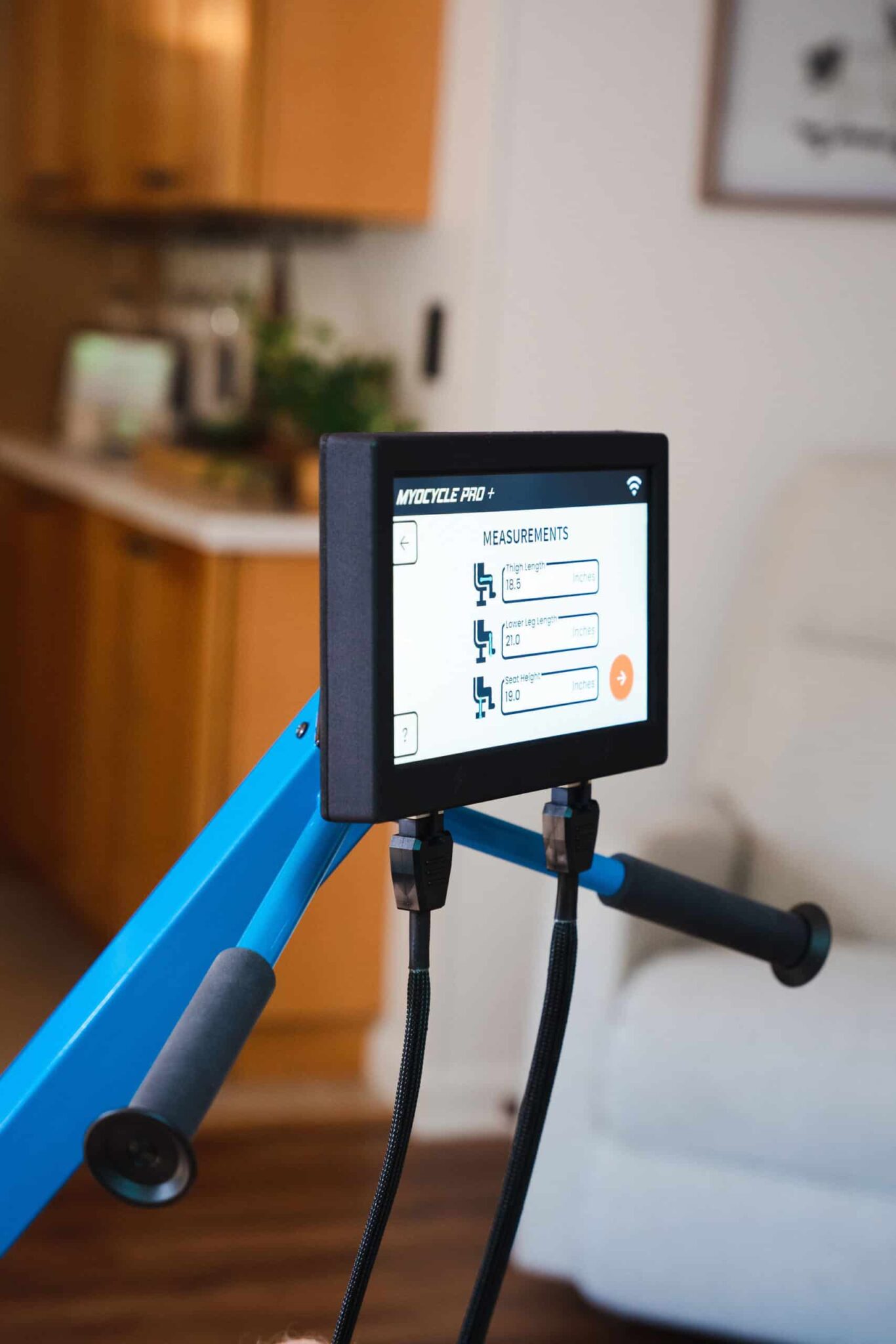
At MYOLYN, we’re committed to making FES cycling more accessible. Our Home Plus system includes a dedicated trunk channel, so patients can continue targeting abdominal muscles at home to support respiratory health and posture. Our team will work directly with your patient to explore every available funding source and help them get the system they need.
A new meta-analysis is changing how we think about respiratory care in SCI. Abdominal FES, on its own or combined with aerobic exercise, shows real promise in boosting lung function, improving airway clearance, and lowering pneumonia risk. Here’s what clinicians need to know.
Study Snapshot
Article: Efficacy of functional electrical stimulation alone and as an adjunct to exercise for improving respiratory function and aerobic capacity in spinal cord injury: a systematic review and meta-analysis
Authors: Jiahao Xiangli; Binquan Ma; Yu Liang; Shi Haijiangshi; Xifang Liu
Published: Jul 31, 2025
Summary: The authors aimed to evaluate the efficacy of FES, both alone (to abdominals) as well as combined with rowing or cycling exercise, on improving respiratory function and aerobic capacity in individuals with SCI.
Motor-complete injuries below C3 retain some function of the diaphragm, however the paralysis of intercostal and abdominal muscles reduces ventilatory capacity and can lead to respiratory complications and hospitalization. Even thoracic level injuries can result in impaired respiratory function due to decreased accessory muscle function, and thereby reduce aerobic capacity during exercise as well as dyspnea during daily activities.
You can find the full article here
Review of relevant terminology:
- FVC: forced vital capacity– the total volume of air exhaled after maximum inhale
- PEF: peak expiratory flow– the maximum exhalation velocity
- MEP: maximal expiratory pressure– maximum exhalation force
- MIP: maximal inspiratory pressure– maximum inhalation force
- VE: minute ventilation– total volume of air breathed in or out of the lungs each minute, reflecting how effectively the body exchanges oxygen/removes carbon dioxide
- VO2 peak: max amount of oxygen consumed during exercise. The greater the VO2 peak, the better the individual’s cardiovascular health/endurance
- TLC: total lung capacity– the maximum air the lungs can hold with a maximum inhale
- FRC: functional residual capacity– the residual air in the lungs after a normal exhale
Previous research demonstrates that FES applied to abdominal muscles can improve respiratory function in people with SCI; the suggested mechanism is that the FES contracts abdominal muscles, leading to increased intraabdominal pressure and facilitating increased expiratory pressure and flow. This, in turn, reduces functional residual capacity by assisting more air out than a standard exhale. The ensuing passive recoil then allows for an increased volume of air in, increasing tidal volume with less inspiratory effort.
Efficacy of functional electrical stimulation alone and as an adjunct to exercise for improving respiratory function and aerobic capacity in spinal cord injury: a systematic review and meta-analysis
Methods
The authors completed a PRISMA-compliant meta-analysis, searching PubMed, Embase, Cochrane Library, and Web of Science through January 2025. Some studies were excluded based on the results of a quality assessment. A total of 23 randomized controlled trials and self-controlled studies (N = 314) that assessed the relevant outcomes referenced above were included.
Results
The authors described the results separately for studies stimulating abdominals vs those using FES+exercise (namely rowing and cycling).
Results of abdominal stimulation
- PEF was assessed in eight included studies and was shown to improve to a statistically significant degree with FES compared to controls. They calculated a mean improvement of 0.8L/s, exceeding in the MID of 0.5L/s and suggesting clinically relevant benefits.
- MEP was studied in five controlled trials evaluated in this review, with pooled results indicating a SMD (standardized mean difference) of 0.93– meaning those who received FES had nearly an entire standard deviation greater improvement in expiratory muscle strength compared to controls. Stronger expiratory muscles are important to improve cough effectiveness and airway clearance.
- FVC was an outcome reviewed in four studies, with a pooled SMD of 0.37, indicating a significant benefit of FES on FVC and a clinically meaningful positive improvement in lung volume for those with SCI.
- MIP was only studied in two studies evaluated. Between the two studies, there was significant variance and the pooled SMD did not reach statistical significance. The authors determined that for MIP, results were inconclusive.
Results of FES+exercise on aerobic function
FES+rowing
- VEpeak: the meta-analysis included six clinical trials which demonstrated non-significant effects on VEpeak. While not significant statistically, the data does suggest a positive trend associated with FES+rowing on VEpeak, but the authors felt additional larger studies are required to make stronger conclusions.
- VO2peak: six studies analyzed VO2peak, and a small to moderate benefit was found in FES+rowing, though there was significant heterogeneity noted among the studies.
FES+cycling
- VEpeak: the authors were only able to identify two relevant studies and did not find a statistically significant effect of FES cycling on VEpeak, stating larger studies are required to make better determinations.
- VO2peak: again two studies were identified assessing VO2peak and the findings were statistically significant, indicating a positive, though small, effect of FES+cycling on VO2peak in users with SCI.
Discussion
The authors highlight that abdominal FES improves FVC, PEF, and MEP, leading to stronger exhalations, better airway clearance, and more effective coughing. Gains in FVC also reflect increased lung volumes available for ventilation, supporting greater activity tolerance. Together, these improvements may play a critical role in reducing respiratory complications in people with SCI.
The researchers note that the evidence is less clear on the improvement in inspiratory measures, perhaps due to the above mentioned mechanism of abdominal FES. Any improvement on inspiration may be secondary to changes in resting lung volumes or diaphragm positioning, as opposed to direct strengthening of muscles of inspiration. The authors do note that MIP, which reflects the strength of these inspiratory muscles, is a key predictor of risk for pneumonia, and further research is warranted to determine how FES may be utilized to help strengthen these critical muscles.
When combining FES and exercise (cycling or rowing) to optimize cardiorespiratory health, the authors categorized the findings as promising, but inconclusive. They did find that FES+rowing and FES+cycling significantly improved VO2 peak, and therefore improved aerobic capacity, which may carry over into improved tolerance or independence in ADLs and a decreased risk for cardiovascular disease. The proposed mechanism of action being the increased demand on the metabolic and cardiovascular systems when contracting the muscles of the lower body via FES.
Bottom Line
Abdominal FES can be a valuable tool to support respiratory health in SCI, especially for improving airway clearance and potentially reducing pneumonia risk as well as increasing lung volumes available for breathing. Clinicians should keep in mind this is also relevant even in thoracic-level injuries where accessory muscle function is impaired.
Additionally, pairing FES with aerobic exercise like rowing or cycling can enhance aerobic capacity. Even modest gains in VO₂peak may translate to better endurance for ADLs and reduced long-term cardiovascular risk.
Clinical Takeaways
- Adding abdominal FES into the plan of care for patients with SCI may strengthen expiratory function, reduce pneumonia risk, and improve ventilatory capacity.
- Remember that while strong evidence is presented in this study for expiratory improvements, the data is promising but less definitive for inspiratory outcomes.
- Consider FES + aerobic exercise (rowing/cycling) as part of long-term wellness programs to build cardiovascular fitness.
- Advocate for use at home when safe—ongoing practice outside therapy may be key to maintaining respiratory health and preventing rehospitalization.
Do you have a patient interested in continuing FES therapy at home?
At MYOLYN, we’re committed to making FES cycling more accessible. Our Home Plus system includes a dedicated trunk channel, so patients can continue targeting abdominal muscles at home to support respiratory health and posture. Our team will work directly with your patient to explore every available funding source and help them get the system they need.