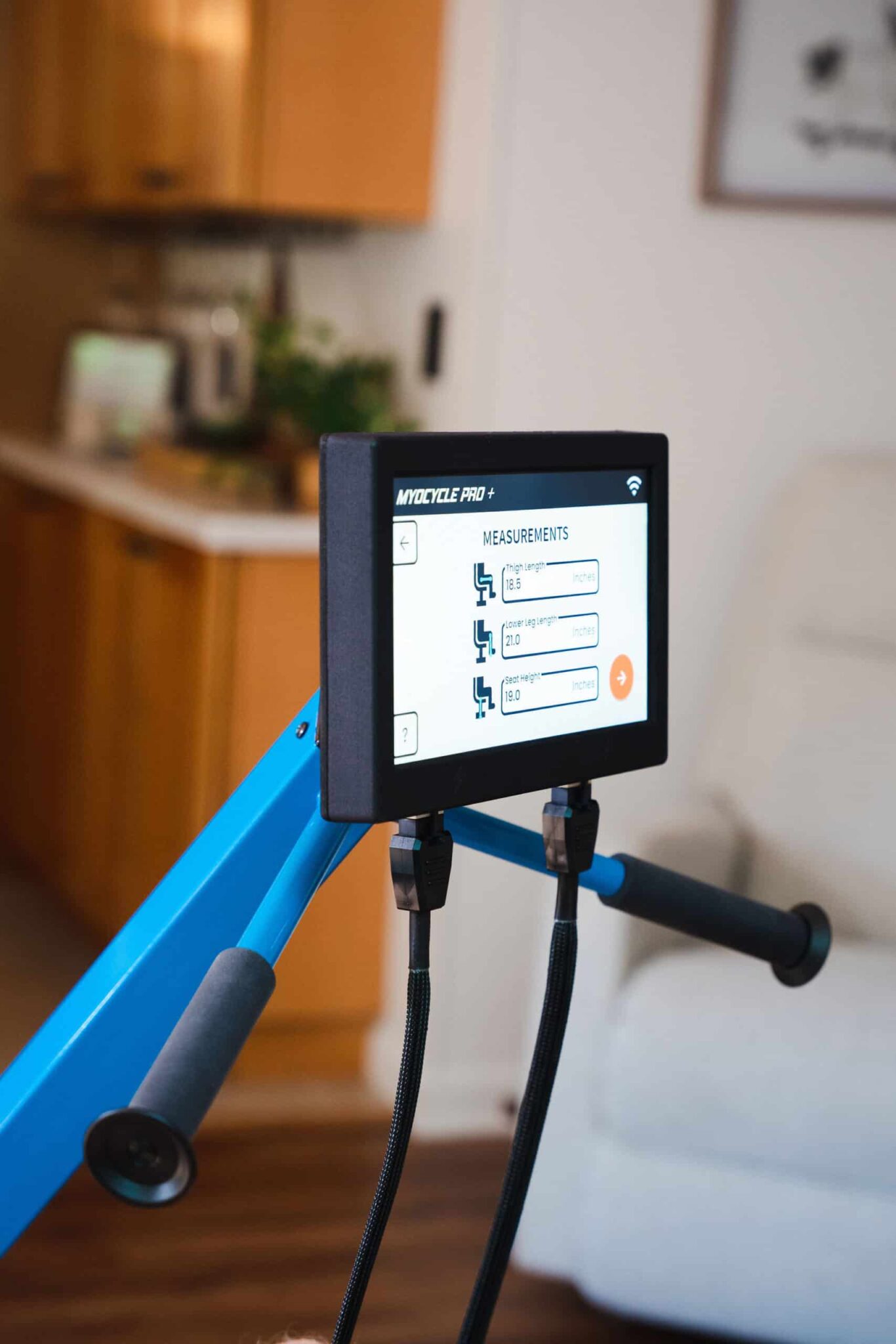
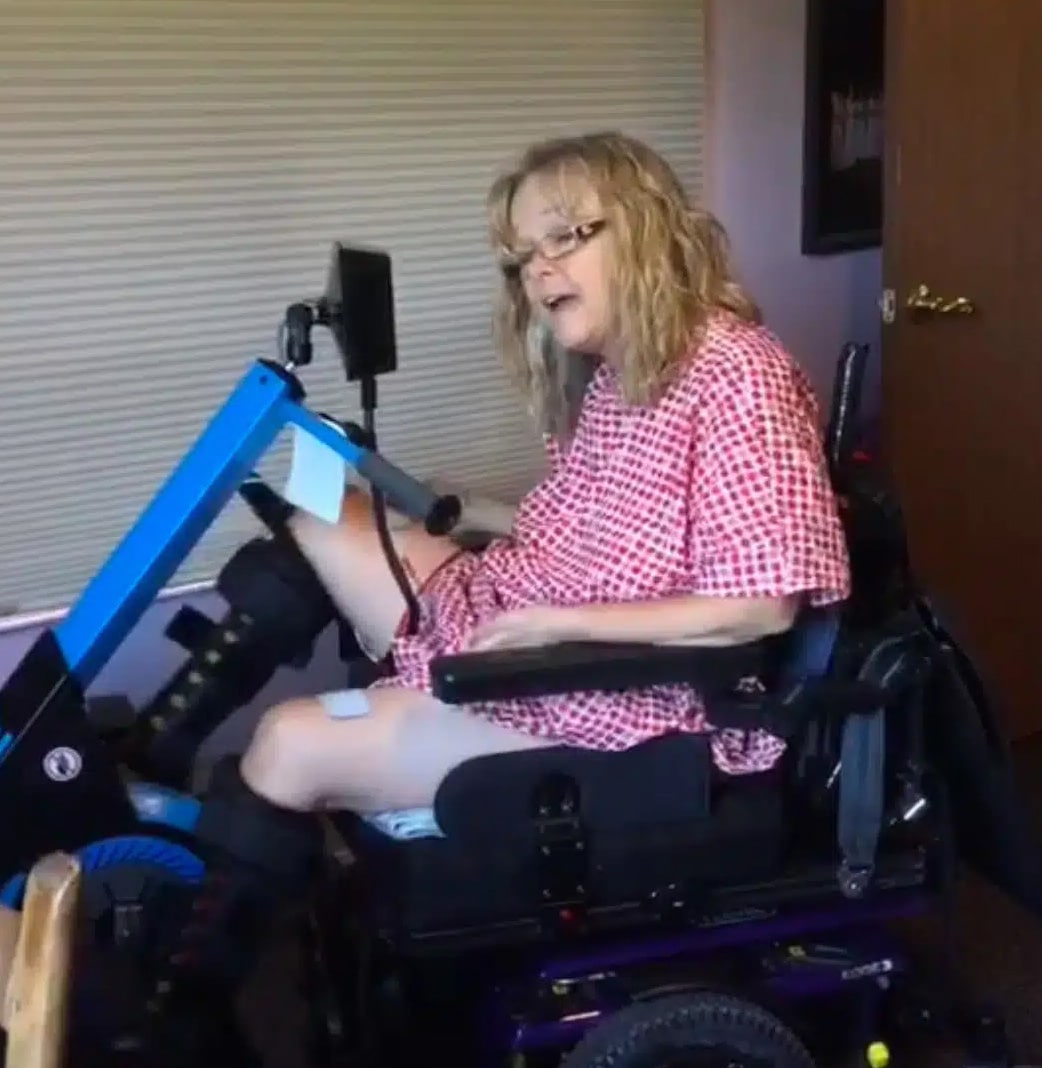
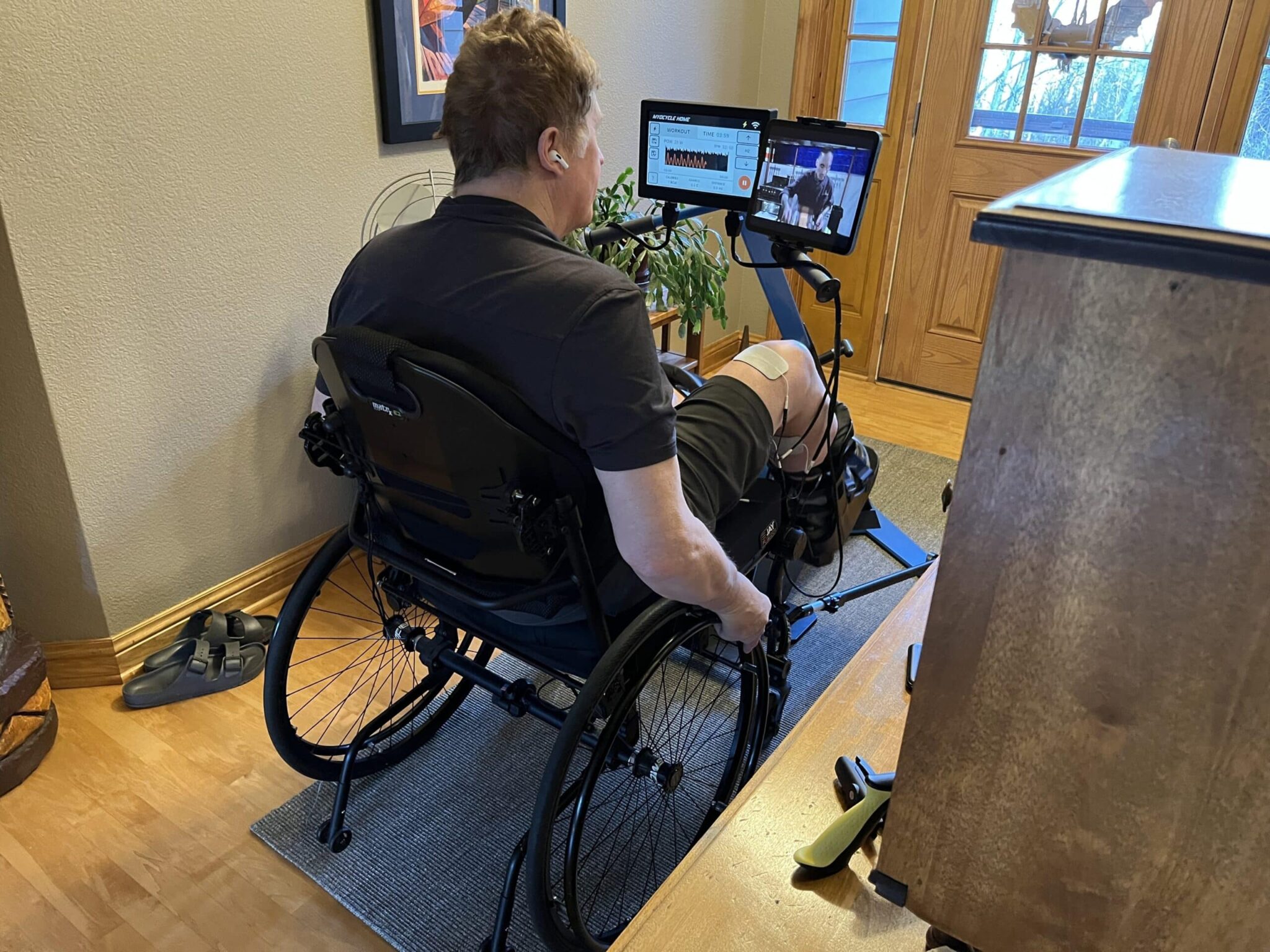
Photo: still from a MyoCycle Story Project rider video, shared with permission. Riders who sent a video received a $50 gift card as a thank-you.
People pay for an FES bike through health insurance, the VA, workers’ compensation, Medicaid waivers, state trust funds, grants, and foundations, and some riders pay through more than one route. Our funding team has helped secure more than $600,000 in funding, including insurance coverage, for people buying a MyoCycle Home or Home Plus. This post explains the routes and how we work them.
What does an FES bike cost?
The price depends on the model and on whether the MyoCycle is for a clinic or a home. We give current pricing for each model when you request information, and our guide to the cost of an at-home FES cycling device covers what an FES bike costs and what comes with it. For most riders, the more useful question is which funding routes apply.
Which funding routes can pay for an FES bike?
Each route has its own rules and paperwork, and these are the ones our team works most often:
- Health insurance: coverage is decided case by case, and our team handles prior authorization and any appeal
- VA benefits: for veterans, through their VA care team
- Workers’ compensation: for injuries that happened at work
- Medicaid waiver programs: state programs that fund assistive technology so people can live in their communities
- State trust funds: programs some states run for residents with spinal cord or brain injuries, usually with a residency requirement
- Grants and foundations: nonprofits that fund equipment, some focused on a particular injury, region, or occupation
- Auto insurance claims: for injuries from a crash, including no-fault and personal injury protection coverage in some states
Why does our team work these routes at the same time?
Each route has its own timeline, and some of them ask for documents from the others, so a foundation or other payer of last resort may want an insurance determination before it decides. When the funding team starts every route that fits a patient’s situation at the beginning, the documents are being gathered while the first answers come back. If a claim is denied, we work the appeal with the physician.
A patient doesn’t have to know which routes apply. Our team asks about the injury, the work history, military service, the state of residence, and the insurance, and builds the list from the answers.
What does a grant look like in practice?
In a video recorded for the MyoCycle Story Project, Celeste Glover said she had ridden her MyoCycle first thing every morning for two and a half years. She described how she got it:
“I am grateful to have been granted this MyoCycle by the Joe Groh Foundation. The Joe Groh Foundation helps people living with spinal cord injury who work in the construction industry.”
Foundations are one of the routes our funding team works, and finding the right one for a patient is part of the job.
Will insurance cover an FES bike?
Sometimes. Coverage is decided case by case, and it depends on the payer, the policy, and the documentation. When insurance is one of the routes, our team takes it through four steps:
- Prior authorization. We send the plan a prior authorization request with the prescription, the letter of medical necessity, and the clinical notes, asking it to approve the MyoCycle before it ships.
- Claim. We submit the claim to the plan. We can still submit one when a prior authorization is denied, because some plans pay the claim anyway.
- Delivery. The MyoCycle ships once payment is in place, typically within one to two business days, by UPS Ground to your front door.
- Appeals. If the plan denies the claim, we appeal through the plan’s first- and second-level appeals and, where it applies, an external review. The other funding routes keep moving the whole time.
We cannot guarantee coverage. Here is how one rider described the process:
“ALL of the Myolyn staff has been super helpful. I cannot emphasize that enough. They kept pushing the insurance company until I was at least able to get some reimbursement.”
Michael W., MyoCycle Home user. Individual experiences vary, and nothing in a user story is a promise of results.
What does the funding team need from the clinician and the patient?
- A referral, or a request through our site
- A prescription request and letter of medical necessity, which our team prepares for the physician to review and sign
- Clinical notes that describe the patient’s function in specific terms
- FES cycling session notes, if the patient has ridden an FES cycle in a clinic
The more specific the notes, the better! Spasm frequency, transfer ability, sitting tolerance, and power output from clinic sessions all give a reviewer something concrete to read. Our post on helping your patient get an FES cycle at home lists what to document.
How do I start a funding conversation?
Request more information about the MyoCycle for your home and our team will talk through your situation, current pricing, which funding routes fit, and what each one needs. Our funding resources page lists the programs we use most.
The MyoCycle is a prescription-only medical device.