


4 Types of Paralysis Explained: Recovery, Mobility & Independence
Liz Fuhrhop, PT, DPT – February 11, 2026
In this article, we discuss four types of paralysis. When someone experiences paralysis—whether from a spinal cord injury (SCI), stroke, or another injury or condition—one of the most pressing questions is: “Will I recover function?” The answer depends on many factors, including the type of paralysis involved.
We’ll explore the most common types of paralysis and how they can influence the potential for recovery, including how function, mobility, and independence may be affected. We’ll also touch on how advancements in rehabilitation and assistive technology are changing the outlook for many.
Understanding the Types of Paralysis
Understanding the Types of Paralysis
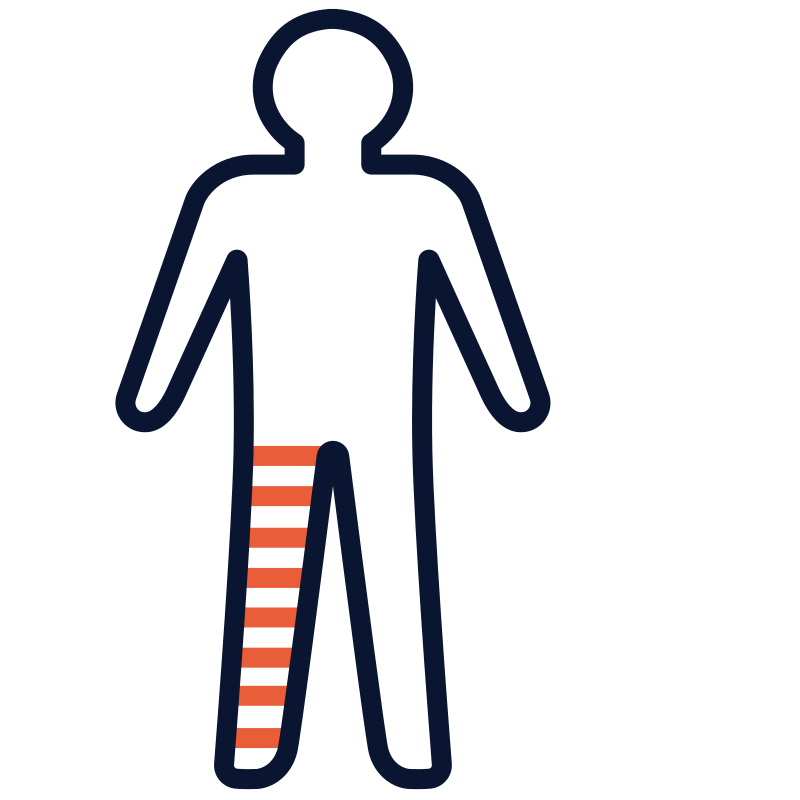
Monoplegia
Paralysis affecting a single limb.
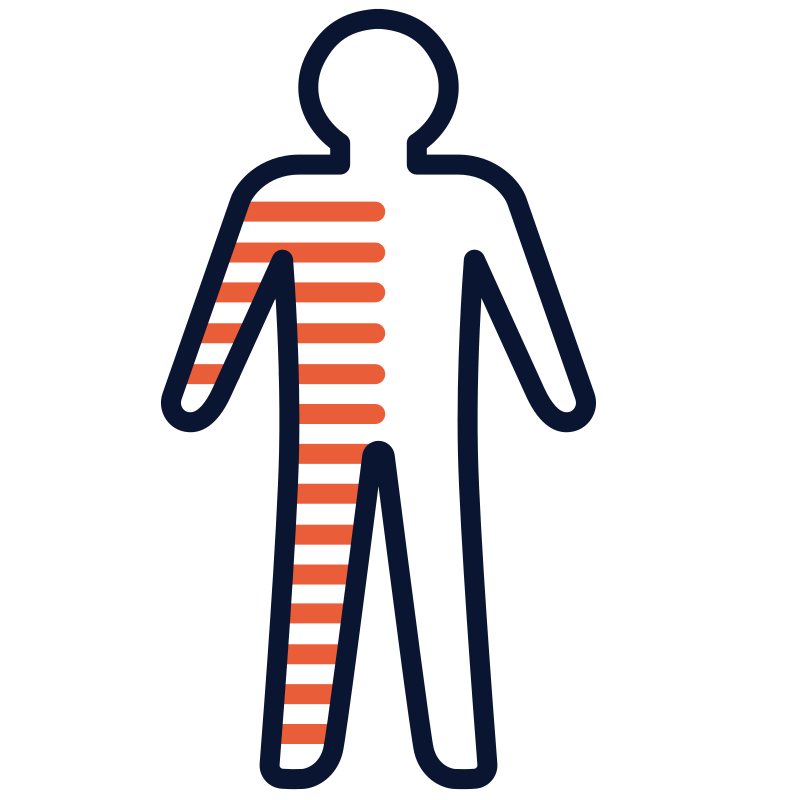
Hemiplegia
Paralysis on one side of the body (commonly seen after a stroke).

Paraplegia
Paralysis affecting the lower half of the body, typically both legs.
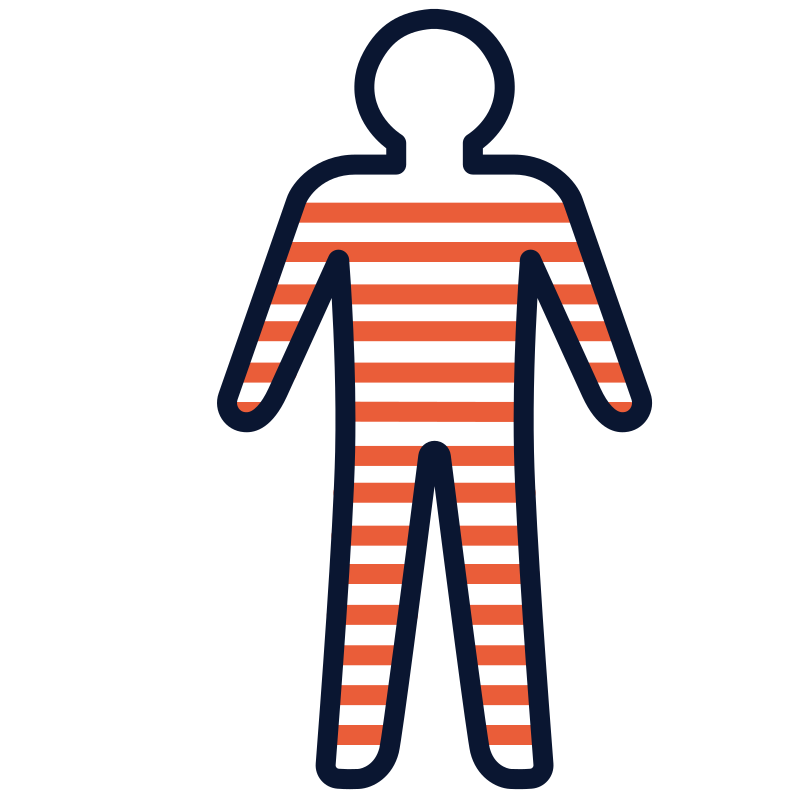
Tetraplegia/Quadriplegia
Paralysis affecting all four limbs as well as the torso.
Complete vs. Incomplete Types of Paralysis: A Key Predictor
With SCI, the distinction between complete and incomplete types of paralysis plays a significant role in the potential for recovery. The ASIA scale is used clinically to evaluate and describe the completeness of an injury, ranging from A (complete injury) to E (normal). Varying degrees of paralysis can also occur with other neurological conditions, but the ASIA scale is generally only used for SCI.
- Complete paralysis means there is no voluntary movement or sensation below the level of injury. This would be classified as an ASIA A injury for SCI.
- Incomplete paralysis means there is still some sensory and/or motor function preserved below the injury site; classification of ASIA B, C, D, or E depends on the degree of preservation of sensory and motor function. Incomplete or partial paralysis may also be referred to as paresis.
Recovery Potential by Temporary vs. Permanent Types of Paralysis
Temporary Paralysis
- Temporary paralysis can accompany conditions such as Bell’s palsy, sleep paralysis, transient ischemic attacks (TIA or mini stroke), and Guillain-Barré syndrome (GBS). While these conditions typically lead to temporary paralysis, which can eventually result in a complete recovery—with rehabilitation and/or time—in some cases, there can be lingering deficits in motor function or sensation.
Certain multiple sclerosis (MS) subtypes, specifically the relapsing/remitting courses, can result in temporary paralysis, which can resolve completely when the relapse passes. For some people with MS, however, motor and sensory impairments can remain after a relapse.
Permanent Paralysis
- “Permanent” paralysis is typically associated with complete paralysis, as it is less likely to result in full functional recovery of the affected
Recovery Potential by Location of Paralysis
Factors That Influence Recovery
While the types of paralysis detailed above are important, other key factors also influence recovery potential:
- Time since injury: Functional gains are typically easier to achieve within the first one to two years after SCI, stroke, and brain injury, but research supports that even those with more chronic conditions may improve with an optimized therapy plan of care and home program that prioritizes inducing neuroplasticity.
For certain MS subtypes, time since diagnosis may influence the ability to achieve recovery of function. Those with less severe physical impairments have more options for interventions, which may help slow disease progression and improve levels of function.
Recovery of function can be difficult and may not always be feasible in those with progressive MS and advanced stages of the disease. However, people with nearly any stage of MS can still participate in meaningful exercise to help optimize health through FES cycling.
- Age and overall health: Not surprisingly, recovery is often better in younger, healthier individuals.
- Level and severity of injury (for SCI): As discussed above, less complete injuries and lower levels of injury will typically see more recovery. Promising spinal cord stimulation techniques may expand what was previously thought possible, even in complete and higher-level injuries. Regardless, nearly anyone with SCI will benefit from reduced atrophy and muscle spasms, increased range of motion, and neuro-muscular re-education driven by FES cycling.
- Access to early and consistent rehabilitation: Whenever possible, work with a rehabilitation team with expertise in your condition—consider seeking care at a model systems center for the best access to cutting-edge research integrated into treatment plans.
- Use of advanced technologies (e.g., electrical stimulation, robotics, exoskeletons): Electrical stimulation can reduce or reverse atrophy, keeping paralyzed muscles healthy. For those with partial paralysis, use of electrical stimulation can facilitate neuromuscular re-education, or the retraining of your nervous system to help you better activate your muscles.
- Personal motivation and support systems: Remember that you have to take ownership of your road to recovery—sometimes, that involves being a determined advocate for yourself, and sometimes it requires a strong focus on your goals! Rehabilitation can be a long road, but you will never regret making the effort for yourself.
Keep in mind that your friends and family want to support you—tell them how they can be there for you! Whether it’s helping you complete your home exercise program, making a financial contribution for a piece of rehabilitation equipment, or giving you a ride to therapy, being specific with what will help you in your recovery journey is key!
What Recovery Might Look Like
Recovery doesn’t always mean full restoration of function. It may involve:
- Regaining partial movement or sensation
- Developing compensatory strategies and utilizing adaptive equipment to increase independence
- Gradually reducing reliance on caregiver assistance for daily tasks
- Enhancing quality of life through technology
In other words, recovery looks different for everyone. For some, walking again might be possible. For others, it might mean gaining better trunk control for better transfers or improved hand use to brush your teeth—each a meaningful milestone.
The Bottom Line Regarding the Different Types of Paralysis
The type of paralysis a person experiences offers important insight into what recovery might look like—but it’s just one piece of the puzzle. Advances in rehabilitation, assistive technology, and research into nerve regeneration are reshaping the landscape of functional recovery.
Whether you’re newly diagnosed or supporting a loved one, understanding the types of paralysis and their implications can help guide expectations and inform next steps on the road to recovery.
To learn more about home-based neuro-rehabilitation with the MyoCycle, please contact MYOLYN.