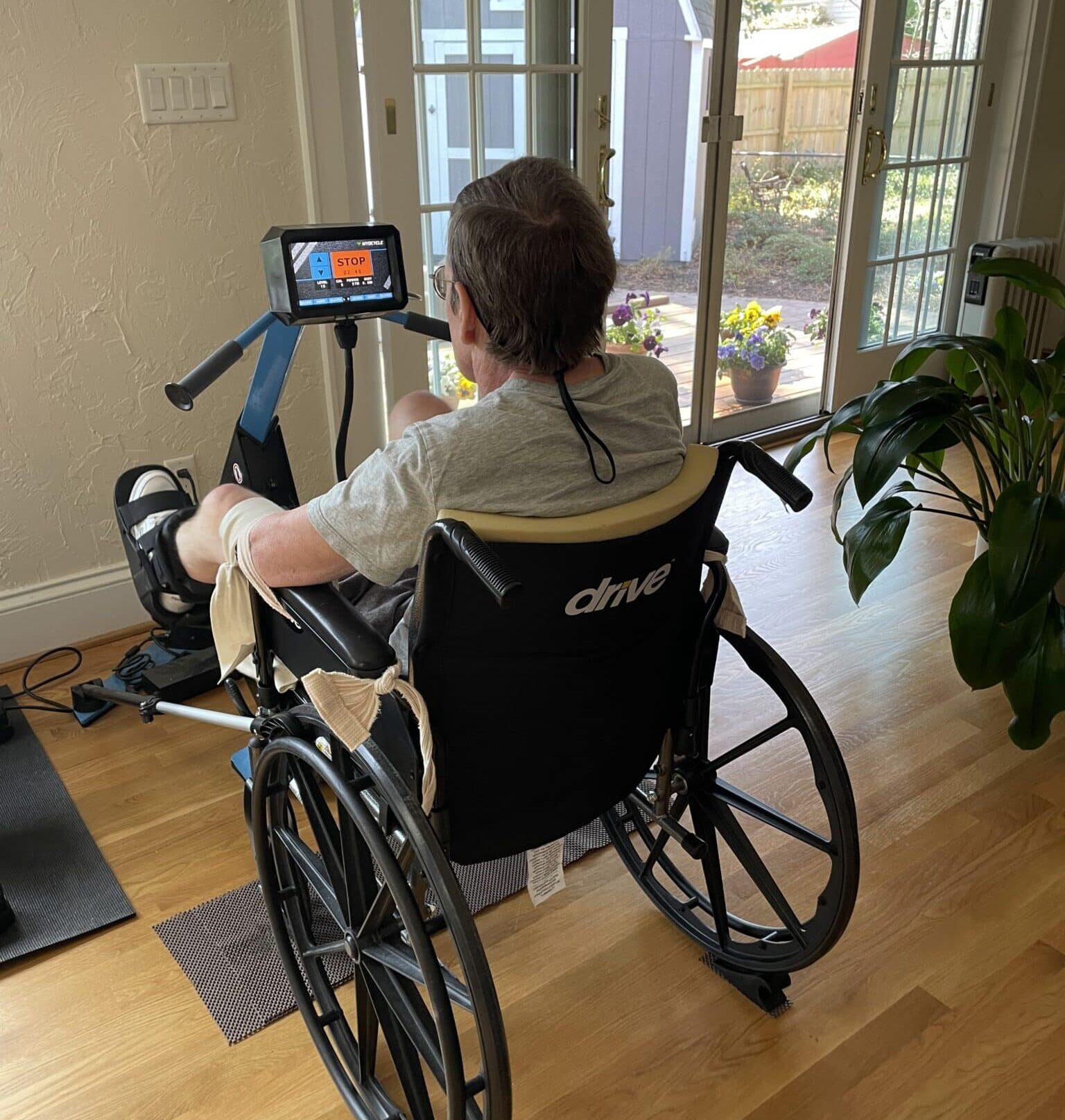
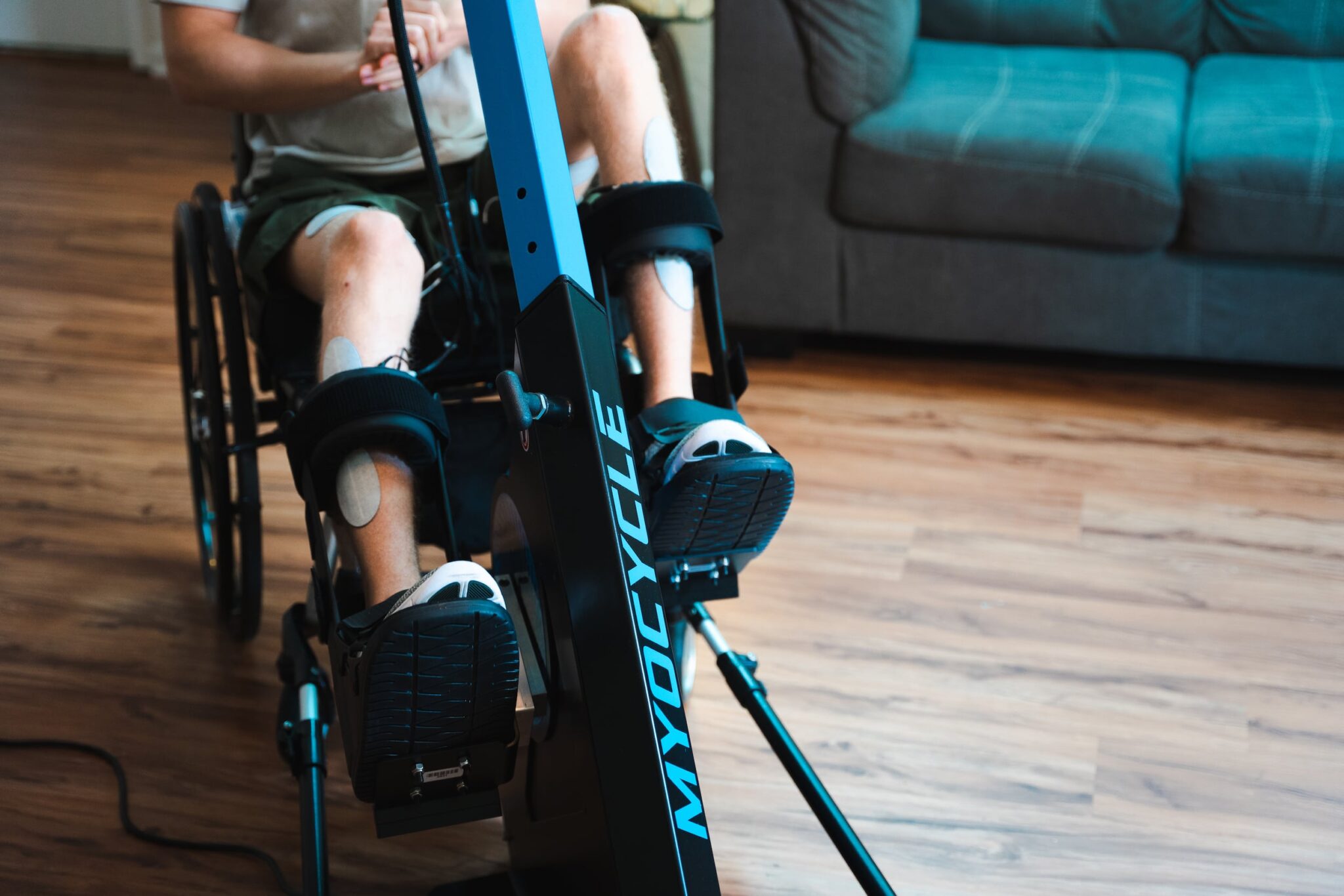
FES therapy for stroke and for multiple sclerosis (MS) has new data in 2026. The American Heart Association and American Stroke Association published a new guideline for adult stroke rehabilitation, and a study of wheelchair users with advanced MS measured how hard an FES bike works the body. This post summarizes both, along with the FES cycling studies around them. World Stroke Day is October 29.
What does the 2026 AHA/ASA guideline say about FES therapy after stroke?
The 2026 AHA/ASA Guideline for Adult Stroke Rehabilitation and Recovery is the first update in ten years. It recommends an ankle-foot orthosis or FES to improve balance and mobility in post-stroke hemiplegia (Class 1, Level of Evidence A). For gait, it says FES of the affected leg combined with an exercise program may be considered (Class 2b, Level of Evidence A). The guideline makes no recommendation specific to FES cycling, and the Class 1 recommendation is not a recommendation for FES cycling.
For gait training after stroke, our MyoSpark NR wearable stimulation system is pending FDA clearance.
What does the research say about an FES bike after stroke?
A 2025 randomized crossover study of 15 people after stroke compared FES-assisted cycling with traditional cycling (Descollonges et al., Journal of NeuroEngineering and Rehabilitation). Perceived effort was lower with FES-assisted cycling, and blood lactate was higher. Heart rate, cardiac output, and cerebral blood-flow velocity rose similarly in both conditions. Cognitive performance improved after both sessions, more so after FES-assisted cycling. The authors concluded that both kinds of cycling produced similar cardiovascular and cerebrovascular responses, but FES-assisted cycling felt less effortful, and because effort is a barrier to regular exercise, they called the results promising for using FES-assisted cycling in stroke rehabilitation. The study had 15 participants.
The evidence on walking and balance is mixed. Two 2026 meta-analyses of FES cycling after stroke, both by Alashram, do not support gains in walking or balance. The gait review (Physiotherapy Research International) pooled 10 randomized trials and 311 people and found small, non-significant effects, which the author calls inconclusive. The balance review (Artificial Organs) pooled 9 trials and 285 people and found Berg Balance Scale scores favoured the control interventions. The cycling studies show lower perceived effort in one small trial, and they do not show gains in walking. Across the wider evidence, FES cycling looks most useful for people who are not yet walking, as a step toward walking. Once someone is walking, walking practice does more for gait than cycling does, and FES can support that walking practice too.
What did the 2026 study find about FES therapy for MS?
Edwards and colleagues (Multiple Sclerosis and Related Disorders, 2026) had 18 wheelchair users with advanced MS, mean age 60.7, complete 15 minutes each of arm ergometry, a recumbent stepper, and FES leg cycling. All three reached moderate-to-vigorous intensity, 58 to 68% of peak oxygen uptake and 79 to 88% of peak heart rate. At the same rating of perceived exertion, FES cycling produced lower oxygen uptake, heart rate, and work rate than the other two. The study did not name the FES cycle it used.
For a person with advanced MS whose aerobic exercise options are narrow, and for anyone asking about an FES bike for MS, the finding is practical: FES cycling is one more way to reach a moderate-intensity session using the legs. It was a single-session study, so it speaks to intensity and not to training effects over time. A separate 12-week randomized trial in 14 people with secondary progressive MS compared FES-assisted cycling with passive cycling (Simpson et al., 2026). In passive cycling the legs are moved through the same pedaling motion without stimulation, so the trial compared cycling with and without FES, not FES against no exercise. With that design, in people with moderate to severe disability, large differences on walking tests would not be expected, and the trial found none. Both groups tolerated the program, no adverse events occurred, and the authors suggest longer programs may be needed to show improvements beyond a lack of decline.
For more on MS, see our posts on how FES exercise and the MyoCycle can help with MS and the benefits of FES cycling for people with MS. For stroke, see FES for standing and walking after stroke.
What should someone with MS or stroke know about the MyoCycle?
The MyoCycle is intended for general rehabilitation, including relaxation of muscle spasms, prevention or retardation of disuse atrophy, increasing local blood circulation, maintaining or increasing range of motion, and muscle re-education. People who ride after a stroke or with MS use the motor and the stimulation together, with the motor holding a steady 35 rpm and stimulation timed to the pedal position.
Some people should not use a MyoCycle. The labeling says: do not use the MyoCycle with patients who have a cardiac pacemaker, implanted defibrillator, or other implanted electronic device, which may cause electric shock, burns, electrical interference, or death. It also says not to use it with patients who have unhealed bone fractures in the lower extremities, severe contractures or extremely limited joint range of motion, or extreme osteoporosis or osteogenesis imperfecta. A physician has to prescribe it, and our team goes over fit with every patient and family, with our clinical specialist seeing the more complex cases.
To learn more about the MyoCycle for home use after stroke or with MS, request more information and our team will talk through your situation and funding options. Therapists can refer a patient here. Let us help!
The MyoCycle is a prescription-only medical device. MyoSpark is pending FDA clearance. MyoSpark NR and Pro are prescription-only devices.